
What to Expect During an ADU Build in Massachusetts

The families who come to us about an ADU build in Massachusetts almost never start by talking about construction. They start by telling us about a person. A mother who moved in during COVID and never quite left. A son back in his childhood bedroom because Boston-area rents are steep. A father-in-law whose Sunday dinners quietly stopped once the drive got to be too much. An ADU is almost always a response to something personal.
This guide reflects what we've actually learned from 30 years of this work: not just the mechanics of permits and phases, but what decisions matter most, where things go sideways, and what the Boston Globe recently described as a process worth understanding deeply before you start.
What Is an ADU, and Which Type Is Right for You?
An ADU, or accessory dwelling unit, is a self-contained living space on the same lot as your primary home, with its own entrance, bathroom, and kitchen or kitchenette. In Massachusetts, they come in three forms. On paper they look interchangeable. In practice, picking the wrong type is the most expensive early mistake we see.
The Three ADU Types
A detached backyard structure is the most versatile option over time and the one tenants and families most consistently prefer because the physical separation gives everyone genuine privacy and independence. It carries the highest upfront cost, but it typically delivers the strongest long-term return.
A garage conversion is the right answer when budget is genuinely the binding constraint. It's faster to complete and costs less because the shell already exists. The trade-off is real, though: you permanently lose parking and storage, and in a Massachusetts winter, that matters more than most people anticipate before it happens.
An attached addition sits in the middle on both cost and timeline. Proximity is its main asset, particularly for caregiving situations where easy access between the two spaces matters. However, that same closeness can feel intrusive for everyone if the connection between units isn't designed with care.
Our honest opinion: if your lot can support a detached structure and your budget can reach it, go detached. We've built all three types over three decades, and detached ADUs almost always serve their owners better: more versatile, better for tenants, stronger resale value. The garage conversion is the right answer when budget is genuinely the binding constraint, not simply the path of least resistance.
The motivation behind an ADU usually falls into one of three categories: multigenerational living, where the goal is keeping aging parents close without sacrificing anyone's independence; rental income, since a well-designed ADU in Lexington or Needham generates meaningful monthly revenue in a persistent rental market; and long-term property value, adding a permanent, versatile structure that serves your needs today and your buyer's needs someday.
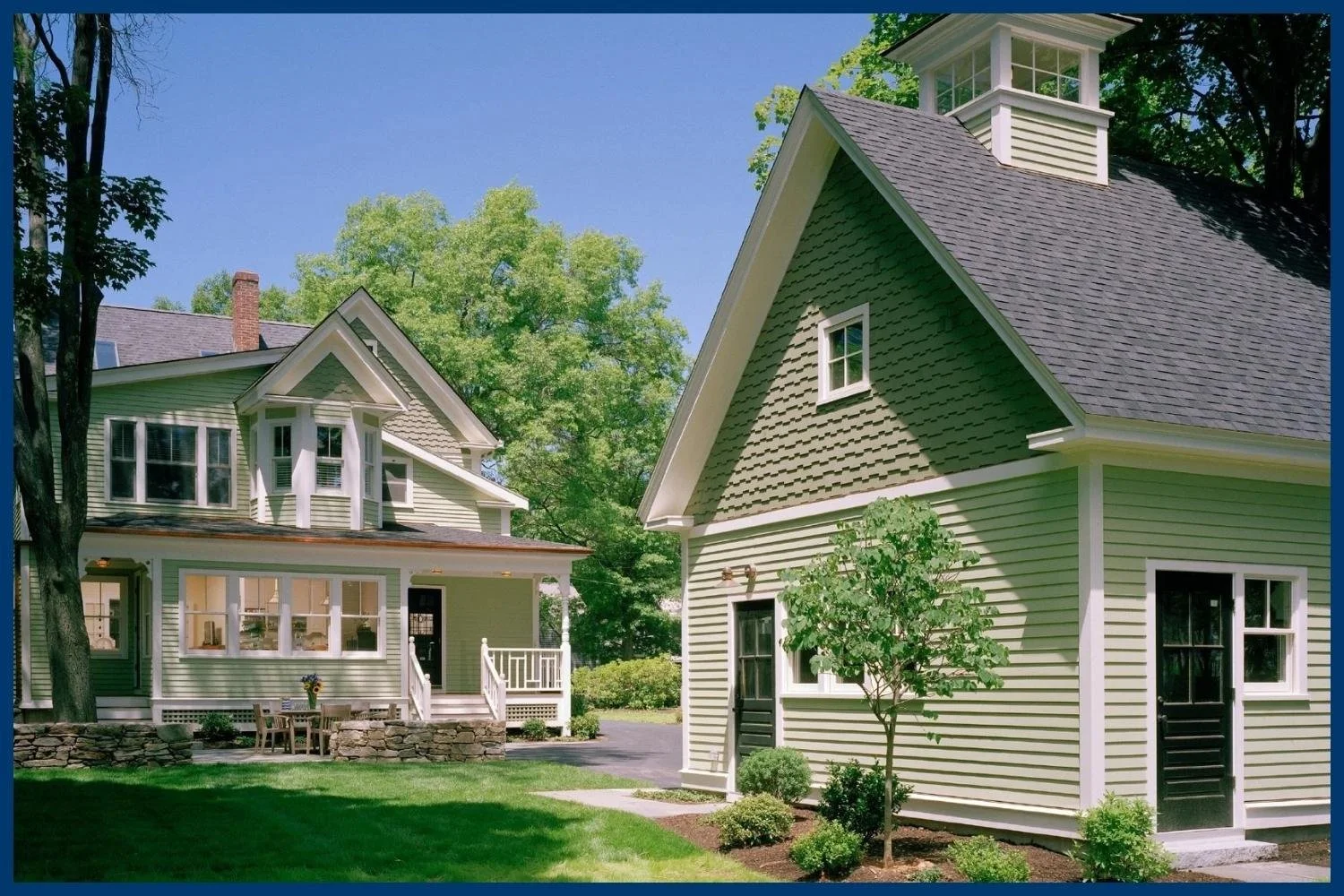
What the Law Now Says: Massachusetts ADU Rules (Effective February 2, 2025)
The Affordable Homes Act (Chapter 150 of the Acts of 2024) changed the landscape significantly:*
• ADUs under 900 sq ft are now allowed by-right in all single-family zoning districts statewide
• No special permit or zoning variance required in most cases
• Towns cannot impose owner-occupancy requirements; you don't have to live there to rent it
• Short-term rentals (under 31 days) may still be restricted by individual towns
• Local setbacks, lot coverage limits, and utility capacity still apply
The barriers are genuinely lower than they've ever been. But 'by-right' isn't a synonym for 'instant.' Your specific lot still has to work.
Phase 1: Discovery and Feasibility (Weeks 1–4)
Every project starts with a walk around your property, before anyone draws or quotes anything. We want to see where the grade drops, where utilities enter the house, how you actually use your yard. We ask questions that seem off-topic: Do you use the garage in winter, or has it been used as storage? These things shape what we recommend and keep us from designing something technically correct that you will quietly resent later.
What we're examining during feasibility covers a lot of ground. We look at lot size, shape, and usable building area after setbacks, along with the existing utility connections and the realistic cost of extending them. Local zoning requirements vary more by town than most people expect, and lot coverage maximums and impervious surface limits are often the binding constraint on smaller lots. We also check for historic district designation or deed restrictions that might affect design or materials, and for properties not on municipal sewer, we assess septic capacity early, since it can affect the entire project direction.
Our Honest Advice on Feasibility
Don't fall in love with a specific outcome before feasibility is done. We've had clients arrive certain they wanted a detached 700 sq ft studio, only to find their septic system can't support a second kitchen. We've also had clients convinced their lot was too constrained, and feasibility revealed real options they hadn't seen.
We'd rather tell you something isn't viable in week one than discover it in week ten.
Learn more about our team and how we approach these early conversations.
Phase 2: Design and Planning (Months 2–4)
Small spaces are harder to design well than large ones. There is nowhere to hide a poor layout decision. The most important design question we ask is: who is actually going to live here, and how does that specific person live?
The answer shapes everything. For an aging parent or in-law suite, the priorities are a zero-threshold shower, wider doorways, lever hardware, single-floor layout, and bright lighting with easy access from the main house. What often gets overlooked is lighting levels specifically. Most ADU designs are underlit for older eyes, and retrofitting fixtures after the fact is expensive.
For a long-term rental, the focus shifts to durable finishes, a private entry with no interior connection to the main house, soundproofing, private outdoor space, and separate utility meters. The thing that most often gets overlooked is sound. Tenants in poorly insulated ADUs don't renew leases. Better insulation means better tenants and lower turnover.
For a home office or studio, strong natural light, fiber and electrical capacity beyond what you think you need, and rough-in for a bathroom and kitchenette even if you're not finishing them now are all important. Future flexibility is the thing people miss. What you might want in five years is cheap to rough in now and significant to add later.
For caregiver housing, accessible entry, proximity to the primary bedroom wing of the main house, and an optional audio connection between units are the functional priorities. What often gets overlooked is the caregiver's own sense of having a home, not a staff room. A space that doesn't feel like someone's home doesn't retain good people.
The decisions you'll make during design go beyond use case. You'll settle on ADU type if it wasn't finalized during feasibility, square footage and room layout, and whether to include a full kitchen or kitchenette. A real kitchen meaningfully expands your rental market and adds resale value. You'll also choose exterior materials and architectural character to match your property rather than something that looks borrowed from elsewhere, decide on utility connections, and make smart home and energy efficiency choices, which are cheap at rough-in and costly to add later.
One Opinion We Hold Firmly
Build in accessibility features from the start. Wider doorways. A curbless shower. Wall blocking for future grab bars. These cost a few hundred dollars each during construction and ten to twenty times more as retrofits. The ADU you build today may house a tenant for five years, a family member for ten, and your own aging self for twenty.
On materials: don't cut finish budgets because the ADU feels secondary. Tenants notice. Family members notice. A well-finished 600 sq ft ADU outperforms a corner-cut 800 sq ft one on every metric that matters.
Phase 3: Permitting and Approvals (Months 3–5)
Permitting surprises most clients, and almost never in a pleasant way. By-right status for ADUs under 900 sq ft removed a real barrier, but each town still runs its own building department at its own pace. Concord moves differently than Wayland. Wellesley has requirements Needham doesn't. We handle applications on your behalf, completely. A missing document or wrong submission format can add four to six weeks to a timeline that's already longer than most clients hope.
A typical ADU project requires a building permit for structural work, framing, and foundation; an electrical permit for new wiring and any panel upgrades; a plumbing permit for new or relocated fixtures; a mechanical permit for HVAC systems; and depending on your town's bylaws and lot specifics, a zoning determination or special permit. Historic commission review is also required for properties in historic districts, and more properties qualify than their owners expect.
A Warning About Historic Districts
Homes in Concord, Lexington, Belmont, Sudbury, and many MetroWest communities may be subject to historic overlay rules or demolition delay bylaws. The review usually just shapes exterior choices, but it adds time, so it's the kind of thing that belongs in your timeline from day one.
Phase 4: Budget and Investment Planning
ADU construction in Massachusetts is not cheap, and we will say that plainly before you commit to anything. Labor, materials, engineering, and permits add up in this market. If a quote sounds remarkably affordable for a detached ADU in Wellesley, ask detailed questions. The gap between a low quote and a realistic one shows up as change orders, material substitutions, or a project that stalls before finish work is done. The right question is not what's the minimum to get this built. It is what investment level produces something to be proud of for 25 years.
The cost picture varies by type. A garage conversion costs less because the shell exists and the build moves faster, but what's inside the existing slab and walls is unknown until demolition begins. Budget for discoveries. An attached addition runs moderate to high, and the structural complexity of tying a new foundation into an existing building means engineering costs should be factored in from day one. A detached structure is the highest upfront investment, with site prep and utility runs being the biggest variables. A difficult grade or a long utility trench can move the budget significantly.
In terms of how a budget typically breaks down: design and permitting represent 10 to 15 percent, covering architect fees, engineering, and all permit costs. Construction takes 75 to 80 percent, covering labor, materials, and mechanical systems. Furnishings and finishing touches account for 5 to 10 percent. And above all of that, we recommend a contingency fund of 15 to 20 percent above your base budget.
On the Contingency Fund: Plan for the Unexpected
Older Massachusetts properties regularly reveal surprises: electrical panels that can't support a second service, drainage issues, septic systems at their limit, soil that needs more engineered footing. We recommend setting aside a contingency fund above your base budget so that if something comes up, it's a routine adjustment rather than a hard choice mid-project.
We send biweekly budget updates throughout construction so you always know where the money is.
Phase 5: Construction (Months 5–10)
A detached ADU build has remarkably little impact on daily life. Your kitchen, bathrooms, and living spaces stay intact throughout. Most mornings the disruption is a truck on the street and tools in the back of the lot. Attached additions and garage conversions require more coordination, which we plan carefully around your household.
The Construction Sequence
Site preparation (clearing, grading, and excavation): We establish grade and excavate for the foundation. Massachusetts requires footings at least 48 inches below grade,** and this is non-negotiable regardless of what any other builder might suggest.
Foundation inspection: The inspector reviews the foundation before framing begins. Nothing proceeds until this passes.
Framing: Walls go up fast. Come to the site now if you haven't been. It is the best moment to catch anything before systems get installed.
Mechanical rough-in (electrical, plumbing, HVAC, low-voltage): All systems run while walls are open, and this is also the moment to add what you might want later. An extra circuit, a hose bib, blocking for a TV mount. Cheap now. Expensive after drywall.
Insulation and drywall: Insulation quality affects energy costs and sound transmission between the ADU and main house, and between the ADU and neighbors. Not a place to trim budget.
Interior finishes: Hardwood floors, tile, custom cabinetry from our Platt Cabinetry millwork shop in Ayer, paint colors tested in the actual light of the space. This phase determines whether the ADU feels like a home. We don't rush it.
Exterior finishes and site restoration: Siding, roofing, trim, and landscaping restoration wrap up concurrently with late interior work. Disturbed lawn gets regraded and reseeded. The goal is a property where the ADU looks like it was always there.
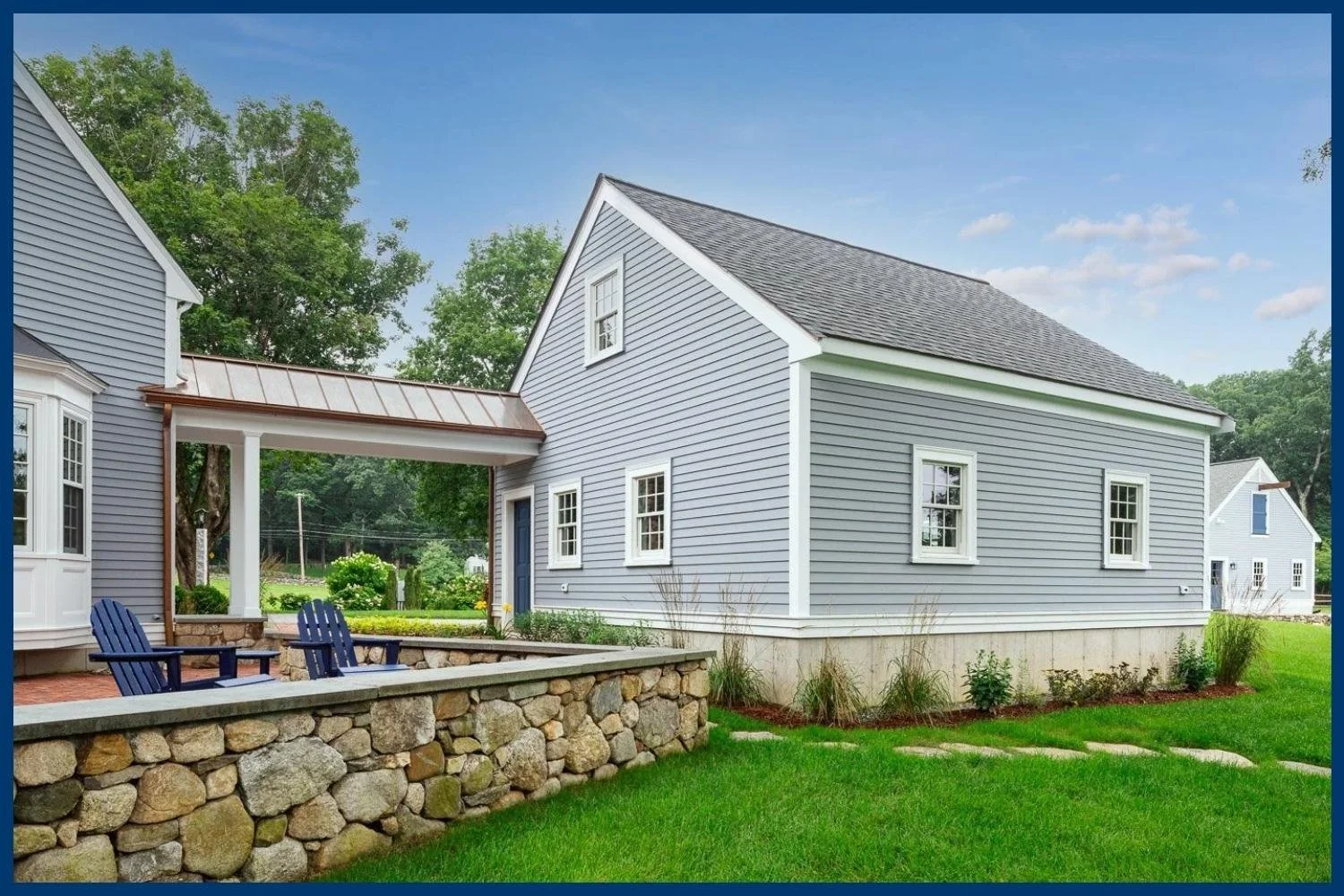
Phase 6: Final Inspections and Handover
The building department, electrical inspector, and plumbing inspector each sign off separately. We sequence the scheduling so the project doesn't sit idle between approvals. The final walkthrough covers every room, every cabinet, every fixture, every switch. If something isn't right, we say so before you have to notice it. Our punch list is a written commitment; craftsmen address it within days.
After the handover, we don't disappear. Some of our client relationships span fifteen years and multiple projects. When the key turns for the first time, whether a parent is settling in or a tenant is carrying boxes up the walk, that moment tends to be quieter than people expect. The months of decisions suddenly make sense.
Questions We Hear Most Often
How long does a build take?
Typically 10 to 14 months total: design takes 2 to 3 months, permitting takes 1 to 3 months (varies by town), and construction takes 5 to 7 months for a detached structure. If a builder tells you 6 months total, ask to see a recent project that actually finished on that schedule.
Can I rent it? Do I have to live there?
Yes to renting, no to living there. The Affordable Homes Act eliminated owner-occupancy requirements statewide. Short-term rentals under 31 days may be restricted by your town. Long-term rentals are clear across Massachusetts.
Will my property taxes increase?
Almost certainly, though the amount varies by town. In our experience, clients who worry most about this discover quickly that rental income or the value of family nearby makes it a non-issue. Check with your local assessor, but don't let it be the deciding factor.
Can we stay home during construction?
For detached builds, yes, and comfortably. Your home stays fully livable throughout. We've never had a family need to relocate for a detached ADU build. Attached additions and garage conversions require more coordination but we plan around your life.
Can I build larger than 900 sq ft?
By-right approval covers up to 900 sq ft (or 50% of your primary home's floor area, whichever is smaller). Going larger is possible in some towns but requires additional local approvals. We explore what's feasible during feasibility.
What's the most common mistake?
Choosing a builder on price. A 20% lower quote has to be recovered somewhere: in materials, in stretched subcontractors, in change orders after you're committed. The conversations we have with clients who made this choice and regret it are among the hardest in this business.
ADU Project Timeline at a Glance
Discovery and feasibility (Weeks 1–4): Led by the Platt project development team.
Design and planning (Months 2–4): Led by the architect and Platt design team.
Permitting and approvals (Months 3–5): Handled by Platt on your behalf.
Budget finalization (concurrent with design): Led by the Platt project development team.
Construction (Months 5–10): Led by Platt production and PM teams.
Final inspections and handover (1–2 weeks after construction): Led by Platt PM and town inspectors.
Ready to Find Out What's Possible on Your Property?
The best ADU conversations don't start with a brief or a budget. They start with a family with a hunch their property could work harder for them, and the willingness to find out. We'll come to your home, walk the site, and give you a straight answer on what makes sense: timeline, investment range, what the process feels like to live through. No pressure, no proposal until you ask.
See examples of what we build, then reach out when you're ready.